▎What is GHK-cu?
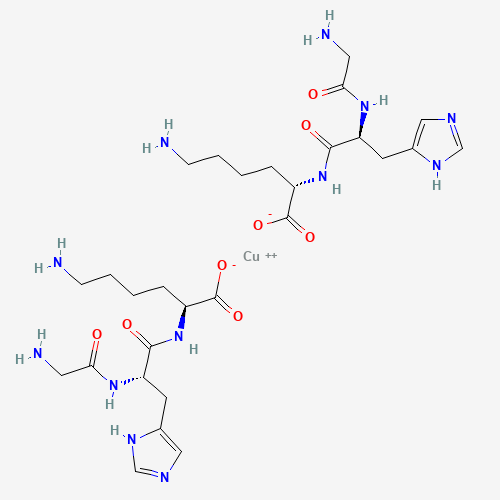
GHK-cu is a complex formed by the binding of a tripeptide—composed of glycine (Gly), histidine (His), and lysine (Lys) linked by peptide bonds—to divalent copper ions (Cu⊃2;⁺). Within its chemical structure, the imidazole ring of the histidine residue forms a stable coordinate bond with the copper ion, creating a coordination compound with a specific spatial conformation and biological activity.
▎GHK - Cu Structure
| 
Source: PubChem |
|
Sequence: Gly-His-Lys Molecular Formula: C28H46CuN12O8 Molecular Weight: 742.3g/mol CAS Number: 130120-56-8 PubChem CID: 9831891 Synonyms: Bisprezatide copper;DL1TR6W6VM |
▎GHK - Cu Research
What is the research background of GHK-cu?
In the 1970s, American scientists investigating the effects of human plasma on tissues from different age groups made a keen observation. When plasma from young individuals was added to liver tissue from older individuals, the aged liver tissue began to efficiently produce specific proteins like that of young tissue. After in-depth analysis, in 1973, he successfully isolated GHK-Cu from human serum. This complex is formed by a tripeptide composed of glycine, histidine, and lysine tightly bound to a copper ion. Further research revealed that GHK-Cu naturally exists in human physiological processes within saliva, blood, and urine. Its concentration levels are closely linked to age: reaching approximately 200ng/mL in the plasma of 20-year-olds, but sharply declining to around 80ng/mL by age 60.
Subsequent research continues to expand the boundaries of GHK-Cu understanding. In the early 1980s, scholars discovered that the human body releases GHK at injury sites, boldly hypothesizing its potential role as an early key signal for skin repair. Since then, extensive research has focused on GHK-Cu's role in tissue remodeling, particularly in skin regeneration. GHK-Cu stimulates the synthesis of collagen, elastin, and glycosaminoglycans while regulating the activity of metalloproteinases and their inhibitors. It exerts positive effects in anti-inflammation, antioxidant defense, and angiogenesis, gradually becoming a subject of research across multiple fields including biochemistry, dermatology, and regenerative medicine.
What is the mechanism of action for GHK-Cu?
Promoting Wound Healing
Cell Proliferation and Migration: GHK-Cu stimulates the proliferation and migration of various cells, including skin fibroblasts and endothelial cells. For instance, at skin wound sites, it accelerates the synthesis of extracellular matrix components like collagen and elastin by fibroblasts, providing structural support for wound healing. Simultaneously, it attracts endothelial cells to migrate toward the wound, promoting new blood vessel formation. This delivers ample nutrients and oxygen to the wound, accelerating the healing process[1].
Regulation of Growth Factors: This complex modulates the expression and release of multiple growth factors, such as transforming growth factor-β (TGF-β) and vascular endothelial growth factor (VEGF). Taking VEGF as an example, GHK-Cu promotes its secretion, which in turn stimulates vascular endothelial cell proliferation and angiogenesis—critical processes for wound healing [1].
Anti-inflammatory Effects
Inhibition of Inflammatory Mediators: GHK-Cu suppresses the production and release of multiple inflammatory mediators, including tumor necrosis factor-α (TNF-α) and interleukin-1β (IL-1β). These mediators play key roles in inflammatory responses. By inhibiting their expression, GHK-Cu reduces the intensity and duration of inflammation, thereby alleviating tissue damage [2].
Modulation of Immune Cells: It also regulates immune cell function. By modulating macrophage polarization toward anti-inflammatory macrophages, it reduces the release of inflammatory mediators and promotes tissue repair [2].
DNA Repair
Activation of Repair Pathways: GHK-Cu activates intracellular DNA repair pathways. When cells are damaged by various endogenous or exogenous factors, they initiate a series of DNA repair mechanisms. GHK-Cu promotes the repair of damaged DNA by regulating the activity of related repair enzymes, such as DNA polymerase and ligase, thereby maintaining genomic stability[2].
Antioxidant Protection: It possesses antioxidant capacity, reducing reactive oxygen species (ROS)-induced DNA damage. ROS can cause DNA strand breaks and base oxidation. By scavenging ROS, GHK-Cu indirectly protects DNA from damage, creating favorable conditions for DNA repair [1].
Regulating Cellular Metabolism
Promoting Energy Metabolism: Regarding cellular energy metabolism, GHK-Cu may influence mitochondrial function. Mitochondria serve as cellular powerhouses, and GHK-Cu may enhance cellular energy production efficiency by regulating the activity of mitochondrial-associated enzymes—such as those involved in the tricarboxylic acid cycle and oxidative phosphorylation—thereby meeting energy demands during cellular processes like growth and repair[2].
Regulating Substance Synthesis: GHK-Cu also modulates the synthesis of crucial intracellular substances. As previously noted, it promotes the synthesis of extracellular matrix components like collagen and elastin. Additionally, it influences the synthesis and metabolism of intracellular substances such as proteins and lipids, thereby maintaining normal cellular physiological functions [2].
What are the applications of GHK-Cu?
Wound Healing: GHK-Cu possesses the ability to promote wound healing. It stimulates angiogenesis, supplying ample nutrients and oxygen to the wound site, thereby accelerating tissue repair and regeneration. GHK-Cu also supports the function of dermal fibroblasts, promoting the synthesis of collagen, elastin, and glycosaminoglycans. This aids in constructing a healthy extracellular matrix and expedites the wound healing process. In Pickart L's study on skin injuries, treatment with GHK-Cu-containing formulations significantly accelerated wound healing speed and improved healing quality [2].
Anti-inflammatory Effects: It mitigates inflammatory responses by inhibiting inflammation-related signaling pathways. In both a lipopolysaccharide (LPS)-induced acute lung injury (ALI) mouse model and in vitro experiments with RAW 264.7 macrophages, GHK-Cu treatment reduced reactive oxygen species (ROS) production, increased superoxide dismutase (SOD) activity, and decreased the generation of inflammatory mediators such as tumor necrosis factor -α (TNF-α) and interleukin-6 (IL-6), achieved by inhibiting NF-κB p65 and p38 MAPK signaling pathways. Thus, GHK-Cu demonstrates therapeutic potential for inflammation-related diseases like ALI/Acute Respiratory Distress Syndrome (ARDS)[3].
Cellular Protection: Exhibits multiple cellular protective effects. In chronic obstructive pulmonary disease (COPD), it protects and repairs lung tissue while restoring COPD fibroblast function. It also inhibits molecules like NFκB, which are believed to accelerate aging diseases, demonstrating anti-aging potential. Additionally, it exhibits anti-anxiety, analgesic, and anti-aggression activities, and activates cellular cleanup functions via the proteasome system, providing comprehensive cellular protection [2] .
DNA Repair: GHK-Cu participates in intracellular DNA repair processes, helping maintain genomic stability and reducing cellular pathology and aging issues caused by accumulated DNA damage. This supports the prevention and treatment of DNA damage-related diseases[2].
Conclusion
As an endogenous tripeptide-copper complex, GHK-Cu exhibits multidimensional biological activity. By activating signaling pathways such as PI3K/Akt and MAPK/ERK, it promotes fibroblast proliferation, angiogenesis, and extracellular matrix synthesis, playing a crucial role in wound healing. It also exhibits anti-inflammatory, antioxidant, and immunomodulatory functions, alleviating tissue inflammatory damage and aiding in trauma repair and inflammatory disease intervention.
About The Author
The above-mentioned materials are all researched, edited and compiled by Cocer Peptides.
Scientific Journal Author
Loren Pickart was a renowned biochemist and founder of Skin Biology Inc., specializing in the study of copper peptides and their applications in skin health and aging. He discovered the copper peptide GHK-Cu in 1973 during his doctoral research at the University of California, San Francisco. This discovery led to the development of skin rejuvenating copper peptides and the establishment of Skin Biology Inc. in 1994. His work has significantly contributed to the understanding of skin biology and the development of anti-aging treatments. Pickart's research continues to influence the field of dermatology and regenerative medicine. Loren Pickart is listed in the reference of citation [2].
▎Relevant Citations
[1] Sun L, Li A, Hu Y, Li Y, Shang L, Zhang L. Self‐Assembled Fluorescent and Antibacterial GHK‐Cu Nanoparticles for Wound Healing Applications. Particle & Particle Systems Characterization 2019; 36: 1800420.DOI: 10.1002/ppsc.201800420.
[2] Pickart L, Margolina A. Regenerative and Protective Actions of the GHK-Cu Peptide in the Light of the New Gene Data. International Journal of Molecular Sciences 2018; 19. https://api.semanticscholar.org/CorpusID:51609461.
[3] Park JR, Lee H, Kim SI, Yang SR. The tri-peptide GHK-Cu complex ameliorates lipopolysaccharide-induced acute lung injury in mice. Oncotarget 2016; 7(36): 58405-58417.DOI: 10.18632/oncotarget.11168.
ALL ARTICLES AND PRODUCT INFORMATION PROVIDED ON THIS WEBSITE ARE SOLELY FOR INFORMATION DISSEMINATION AND EDUCATIONAL PURPOSES.
The products provided on this website are intended exclusively for in vitro research. In vitro research (Latin: *in glass*, meaning in glassware) is conducted outside the human body. These products are not pharmaceuticals, have not been approved by the U.S. Food and Drug Administration (FDA), and must not be used to prevent, treat, or cure any medical condition, disease, or ailment. It is strictly prohibited by law to introduce these products into the human or animal body in any form.